Compare actual site conditions before our chemical intervention versus the finished, watertight protection certified across Greater Hyderabad.
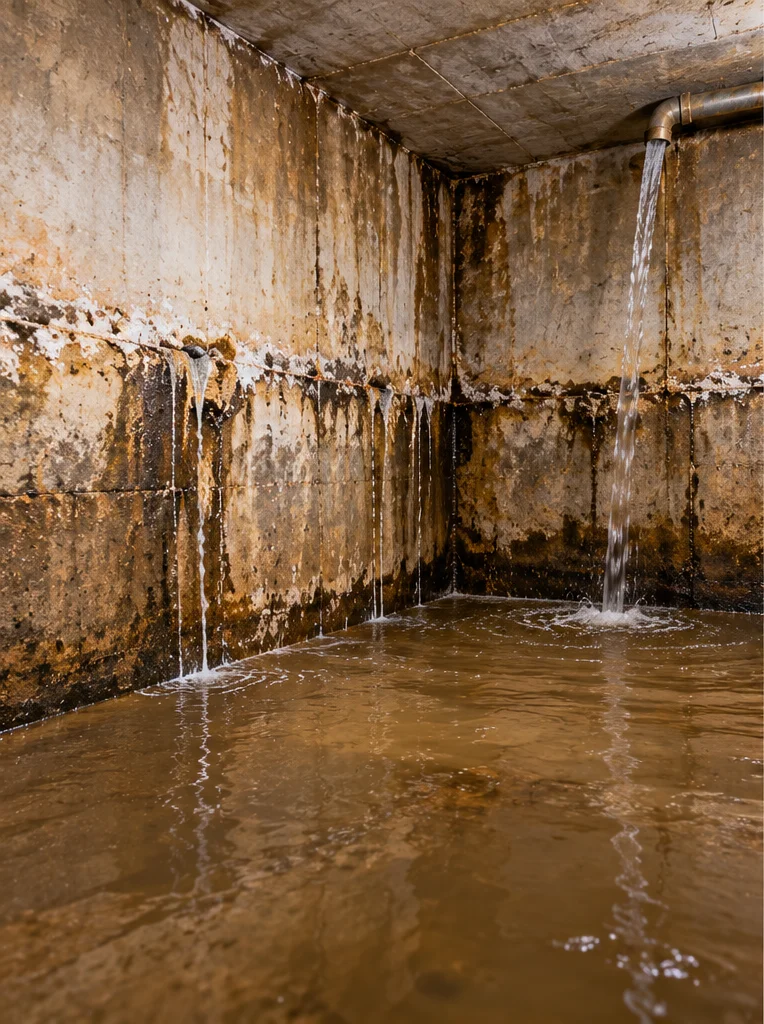
A 120,000-litre underground reinforced concrete drinking water tank developed severe joint leaks. Water was seeping out through cold construction joints, contaminating the potable water supply with surrounding subsoil mud and depleting society water reserves daily.
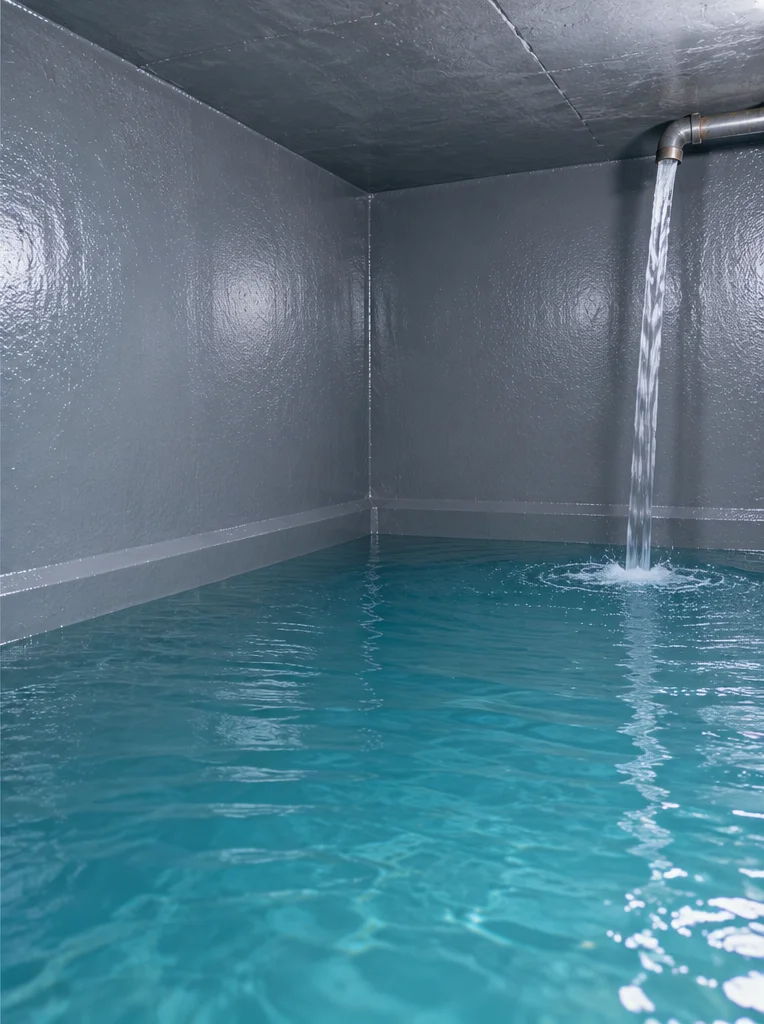
1. Complete dewatering, sludge extraction, and bio-wash de-algae treatment.\n2. Pressure routing of all cold construction joints and corner fillets with rapid-setting crystalline mortar.\n3. Pressure injection of microfine cementitious grout into porous honeycomb concrete zones.\n4. Dual-coat application of certified food-grade, potable-safe 2-component flexible cementitious polymer coating (CFTRI / WRAS compliant).\n5. 48-hour chemical curing followed by mandatory water quality potability lab testing.
An expansive 32,000 sq. ft Pre-Engineered Building (PEB) metal roofing system experienced extensive water leakage through rusted roof sheet J-bolt screw fasteners, ridge cap overlaps, and valley gutters, damaging palletized FMCG inventory.
1. High-pressure air cleaning and mechanical de-rusting of all rusted metal sheet overlaps.\n2. Application of rust-converting primer on all corroded fasteners and metal flashings.\n3. Encapsulation of 8,500+ roof screws with butyl rubber waterproof capping.\n4. Application of stitch-bonded polyester reinforcing fabric embedded in high-tensile liquid polyurethane membrane over all sheet seams and valley gutters.\n5. Top-coating with solar-reflective heat-insulating waterproofing coating (SRI 108) reducing internal warehouse temperature by 5°C.
A 7-story residential apartment on Banjara Hills Road No. 12 developed widespread horizontal and shear cracks on exterior wind-facing plaster. Driving monsoon rain saturated the masonry, causing mold growth, peeling interior paint, and foul odor in 14 apartments.
1. Suspended cradle scaffold access across all four exterior facades.\n2. High-pressure washing to eliminate algae, airborne soot, and chalky paint.\n3. Stitching of structural shear cracks using crack-bridging flexible elastomeric paste.\n4. Application of silicone-infused deep penetrating silane-siloxane waterproof primer.\n5. Double coat of 100% pure acrylic elastomeric anti-carbonation waterproof coating with 7-year anti-fungal warranty.
A three-tier basement parking facility in Madhapur/Hitech City suffered active groundwater gushing through retaining wall cold joints and floor raft cracks under heavy hydrostatic pressure during peak rainfall, flooding the generator room.
1. Installation of high-pressure brass injection ports (packers) along 180 meters of cold joints.\n2. Injection of hydrophilic polyurethane grout reacting on water contact to expand 25x into flexible closed-cell rubber.\n3. Application of crystalline waterproofing slurry across internal retaining wall faces.\n4. Polymer modified mortar sealing of all injection packer holes.\n5. Negative-side epoxy moisture vapor barrier coating.
An exposed cantilever balcony subjected to driving monsoon rain had poor gradient and defective skirting joints. Water leaked downward through the slab edge, corroding reinforcement rebar and causing ceiling plaster collapse on the portico below.
1. Chipping out corroded concrete and passivating exposed rebar with zinc-rich anti-corrosion primer.\n2. Micro-concrete structural reinstatement with polymer bonding agent.\n3. Creation of 50mm coved fillet angle at all floor-to-wall junctions.\n4. Dual-coat hybrid aliphatic polyurethane UV-stable waterproof membrane installation.\n5. Creation of drip mold groove (chhajja drip) on balcony underside to eliminate capillary travel.
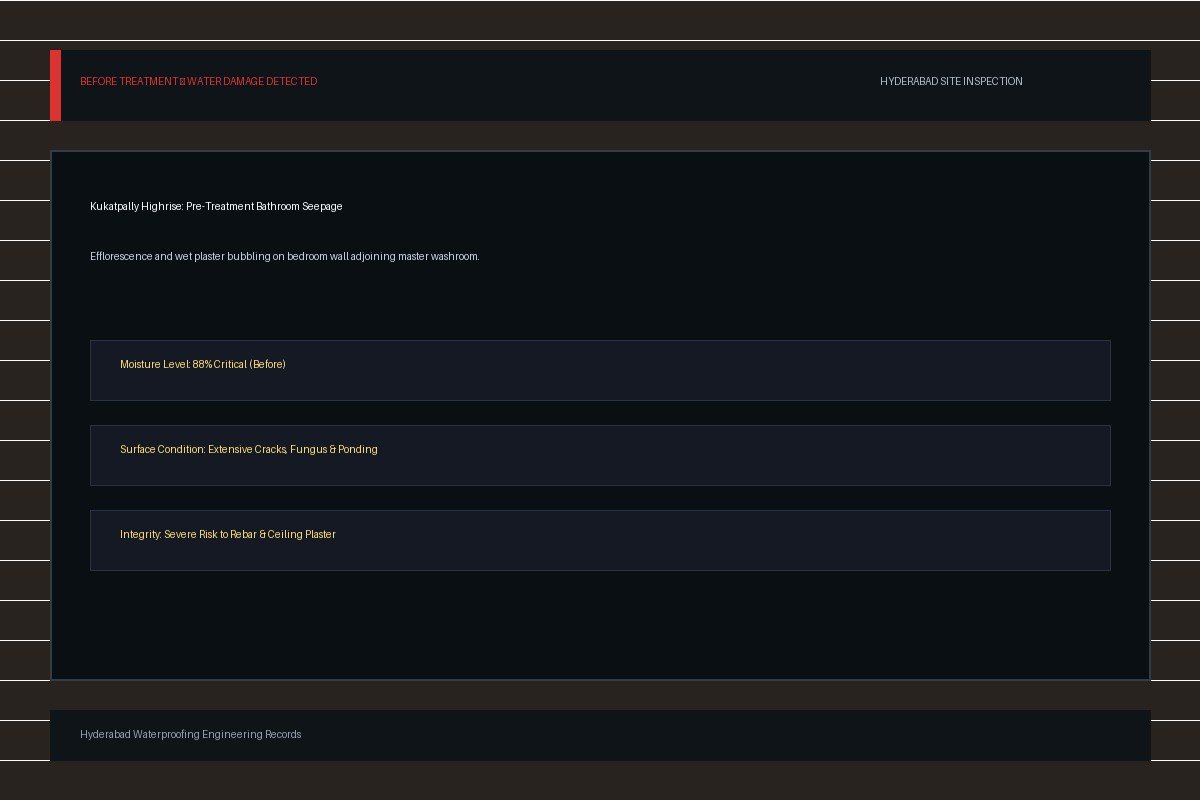
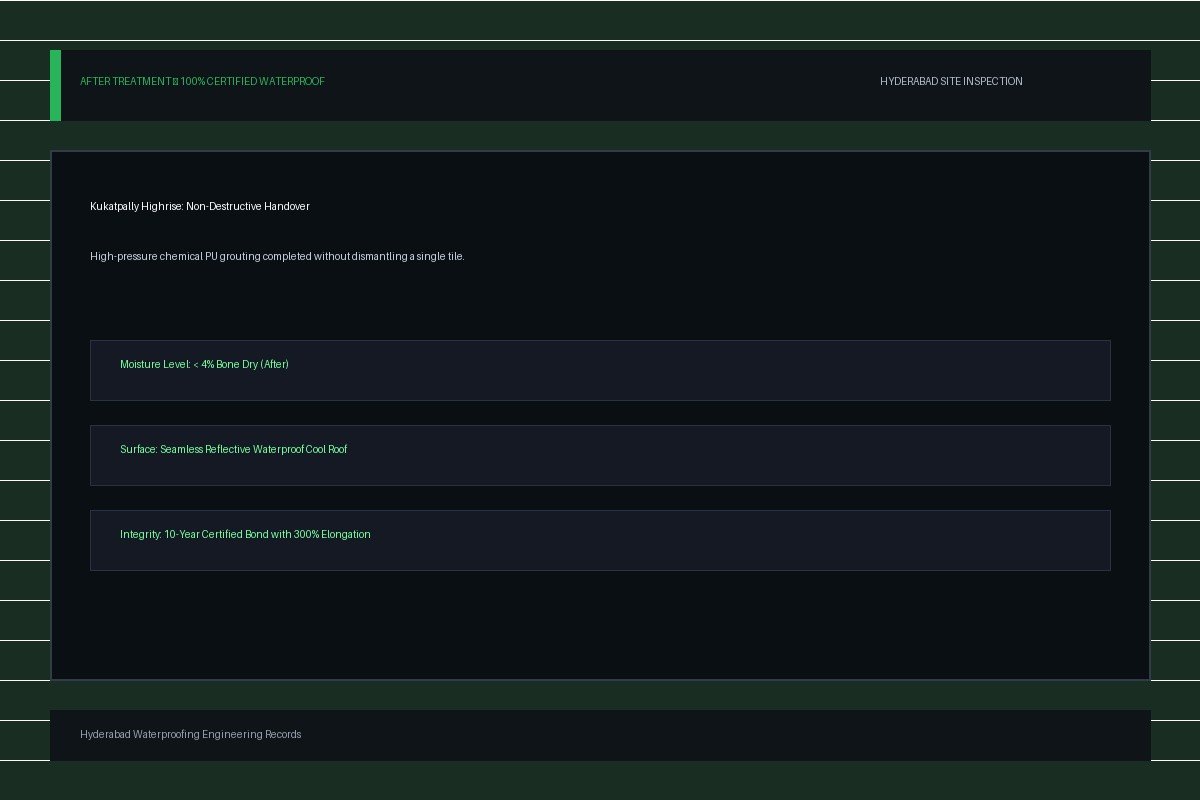
Water seepage from an upper-floor bathroom sunken slab was severely damaging the downstairs ceiling and bedroom adjacent walls in a premium Kukatpally apartment tower. The homeowner wanted a 100% leak-free repair without breaking costly designer Italian marble tiles.
1. Endoscopic camera pipe inspection to rule out concealed plumbing rupture.\n2. High-speed diamond grooving of tile perimeter grout joints.\n3. Injection of low-viscosity hydrophobic polyurethane (PU) grout into sunken slab capillary channels at 2,500 PSI.\n4. Complete regrouting with chemical-resistant epoxy grout.\n5. Nano-molecular hydrophobic penetrating barrier applied over all floor and wall tile joints.
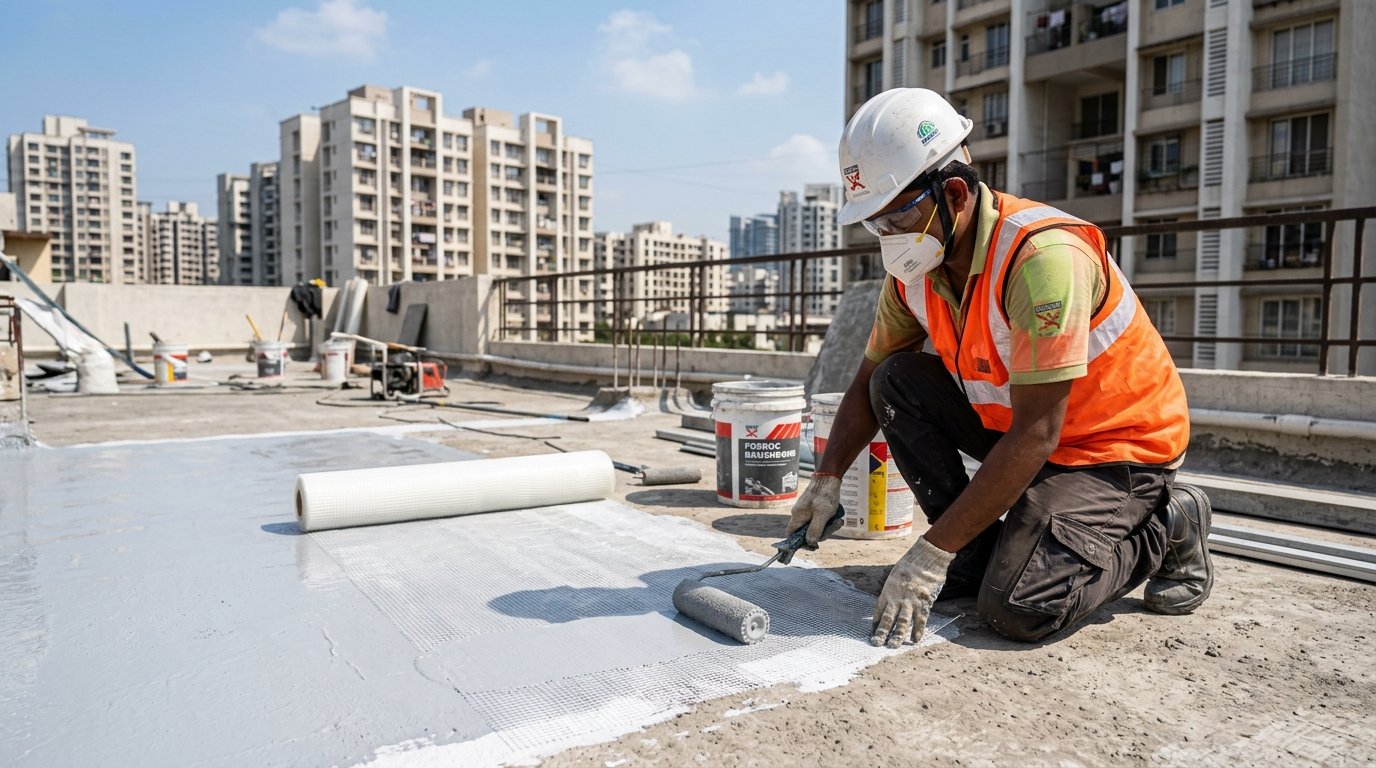
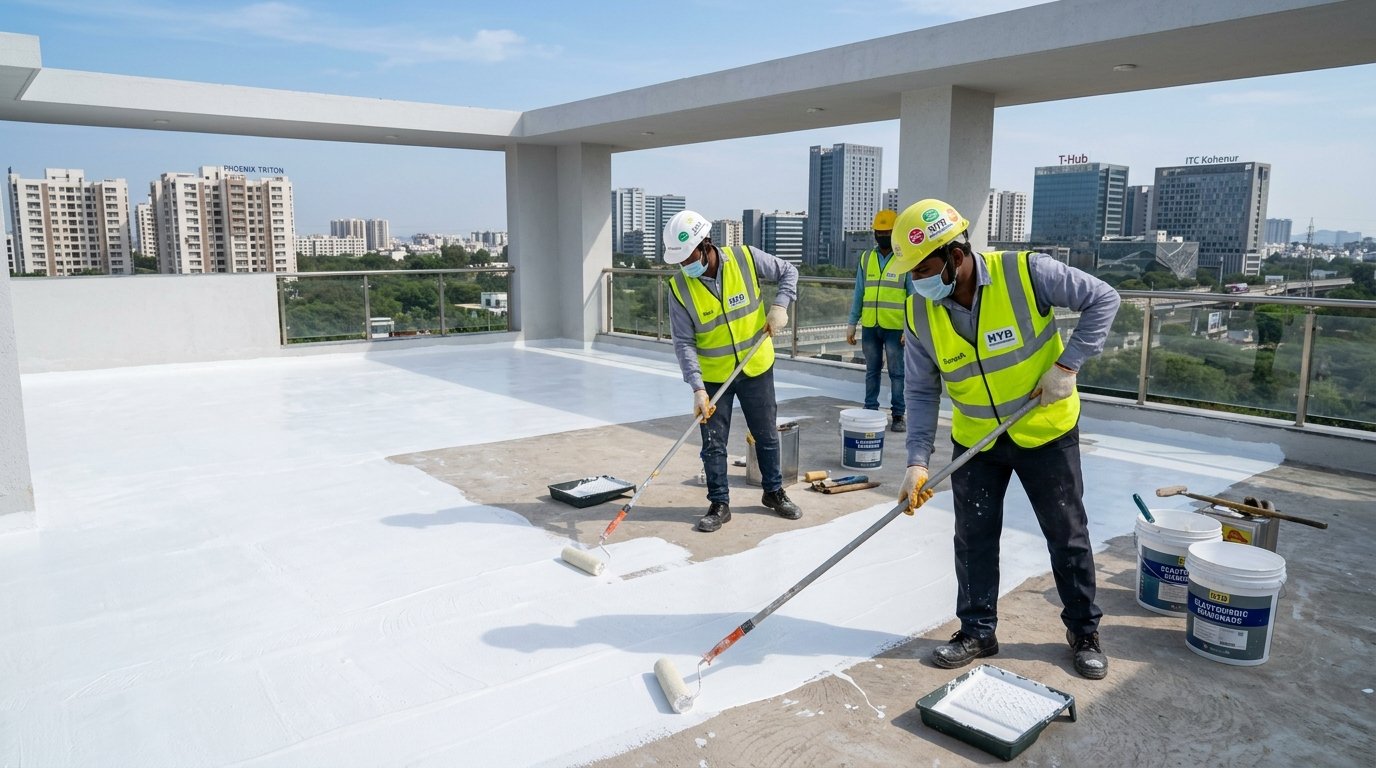
Severe rainwater stagnation on the expansive 6,200 sq. ft flat terrace roof caused hairline shrinkage cracks in the reinforced cement concrete (RCC) slab. Rainwater penetrated into top-floor master bedrooms, causing false ceiling sagging, peeling paint, and structural efflorescence along beam joints during heavy monsoons.
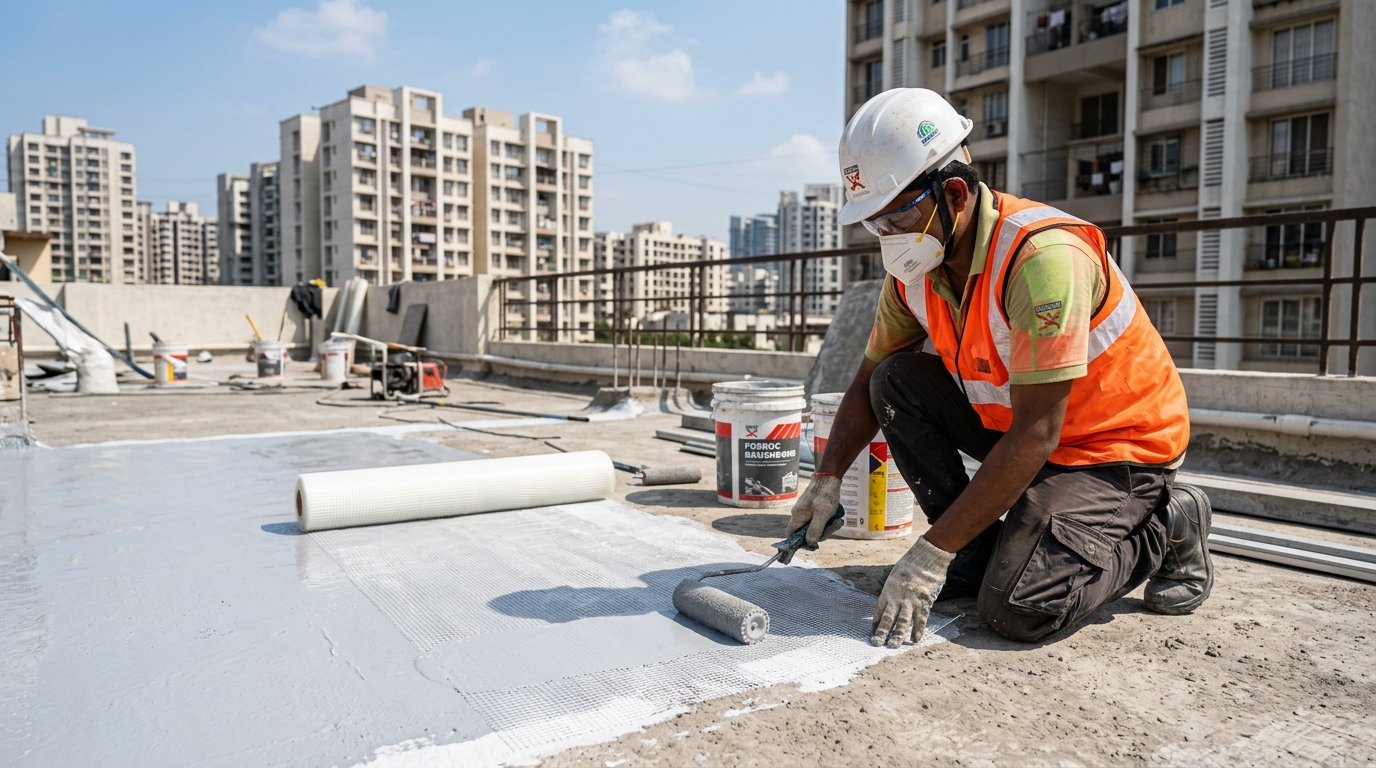
1. Complete mechanical wire-brushing, high-pressure washing (150 bar), and chipping of all loose screed.\n2. V-groove carving of all surface cracks with epoxy mortar repair.\n3. Application of high-penetration solvent-based bituminous primer.\n4. Heat-torch application of 4mm thick polymer-modified Atactic Polypropylene (APP) elastomeric membrane with 100mm overlaps.\n5. Termination into perimeter parapet reglets with PU sealant.\n6. 72-hour hydrostatic ponding test followed by protective screed casting.
Water seepage from 3rd-floor master bathroom causing mold and plaster drop on the 2nd-floor ceiling. The owner wanted zero tile breakage.
Cleaned and vacuumed all tile grout lines, injected polymer resin into trap collar seams, filled all tile joints with two-component chemical-resistant epoxy grout, and sealed sanitary fixtures with anti-fungal polyurethane caulking within 24 hours.
Severe active water ingress through basement retention wall cold joints and elevator pit during heavy monsoon season, risking electrical lift mechanisms.
Drilled 140 high-pressure packer ports along cold joints and injected hydrophobic polyurethane resin at 250 bar pressure. Active leaks were arrested instantly, followed by a double-coat crystalline barrier slurry across the entire basement slab perimeter.
Repeated ceiling seepage across 4 interconnected premium villas caused by damaged expansion joint seals and fractured screed after intense summer heat.
Removed degraded surface screed, chased and filled all expansion joints with high-grade polyurethane joint sealant, applied bituminous primer, and torched a 4mm mineral-finished Atactic Polypropylene (APP) membrane across 6,200 sq. ft with a successful 72-hour ponding test.